MUSEUM AND ORATORY OF SANTA MARIA DELLA VITA
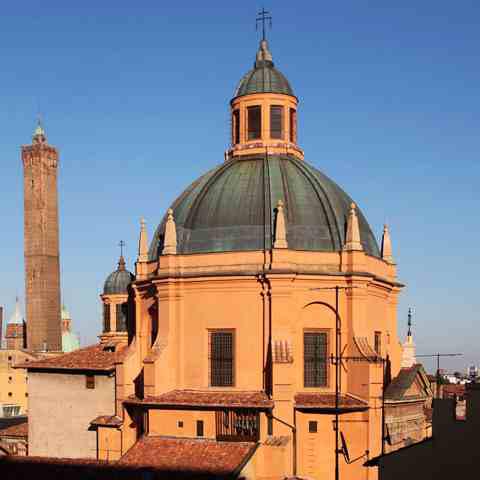
The monumental complex of Santa Maria della Vita was built in the 13th century, as a Hospital and Church, with the latter
having the dome designed by Bibiena, is the most important example of Bolognese Baroque and houses the famous Pietà of Christ Dead by Niccolò dell’Arca, the "stone scream," according to the famous definition by D’Annunzio,
Adjacent to the church is the Oratory, with the sculptural group of the Assumption of the Virgin by Alfonso Lombardi, and the Museum of Health and Assistance, as well as the Gregorian School Benedict XVI,
Since 1814 the complex became the Major Hospital until the bombings of 1943, when it was razed to the ground.
The Sanctuary and its surroundings constitute the heart of the historic center of Bologna, the so-called Quadrilateral; restored, it has been serving its current function as a museum and exhibition center since 2010.
THE PIETÀ
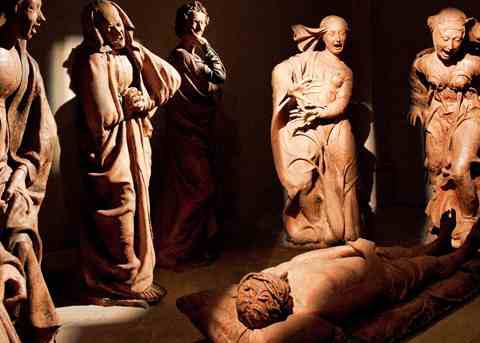
The Lamentation over the Dead Christ is the masterpiece of Niccolò dell'Arca housed at Santa Maria della Vita.
It is a work consisting of seven life-size figures in terracotta with traces of polychromy, which is presumed to have been created between 1463 and 1490, and whose exact arrangement is unknown.
The dead Christ is in the center, lying down with his head resting on a cushion.
All around the body are the other figures, including the two women torn apart by pain and with their clothes billowing in the wind.
Detached from the others, the figure of the client, facing the spectator, in Renaissance attire.
Neptune: architect of the waters
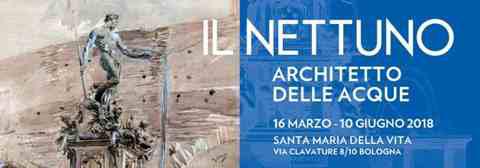
The Neptune: architect of the waters
Bologna, the water for the city between the Middle Ages and the Renaissance
The exhibition pays tribute to the Neptune Fountain, one of the symbols of the city of Bologna and one of the most renowned and admired masterpieces of Renaissance art.
The exhibition project at Santa Maria della Vita illustrates, through the display of works, documents, and selected materials, the genesis of the project and the underground water supply system designed to bring water to the city center, from the Middle Ages and Roman antiquity to the Renaissance infrastructural interventions.
The itinerary begins with the construction of the Augustan aqueduct of Bononia and then develops in the medieval city construction site, enhanced by the dense network of waterways derived from the Savena and Reno canals, themselves regulated by monumental locks still fully functional today.
The intertwining of science, technology, and water culture reveals an urban landscape still little explored and undoubtedly surprising: a way of reading the city and its architecture from a historical perspective.
from March 16th to June 10th 2018
how to get to the Museum
8-10 Clavature Street - historic center
Bus 11, 13, 14, 19, 20, 25, 27, 29, 30, 37
stop at Piazza Maggiore or via Rizzoli
Shuttle A: Piazza Galvani stop
Train: 15 minutes by foot from the Central Station
Parking: Underground parking in Piazza VIII Agosto
contacts - timetable - fares
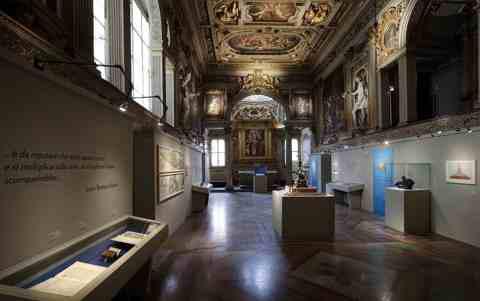
Museum and Oratory of Santa Maria della Vita
8-10 Clavature Way, Bologna,
+39 051 230260
santamariadellavita@genusbononiae.it
Opening
Tuesday, Wednesday, Thursday, Friday, Saturday, Sunday: 10-19
Mourning: 10:30-18:30
Admission
Full - Museum and Oratory included : € 6
Reduced - Museum and Oratory included : € 4
What to do today?
Guide to beautiful things to see and do in the city and its surroundings
THEATER | CABARET | FAIRS | VARIOUS EVENTS
MARKETS AND FAIRS | ART | GALLERIES | FESTIVALS
SPORTING EVENTS | CONCERTS | OPERA | BALLET | MUSICALS
ENJOY THE CITY!
All events, day by day, to plan your visit or your evening
— inBologna.it