HISTORY OF BOLOGNA
From the origins of Bologna to ...
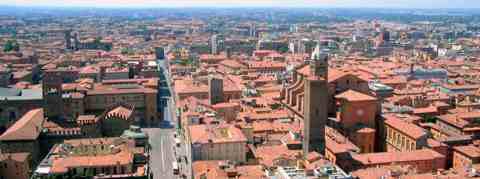
The story would start like this: at the beginning VELZNA was the name of this location, then become FELSINA then finally with the Romans BONONIA -BOLOGNA, the name by which we know it today.
But it is already in the Early Iron Age that the area will become of great interest to historians and archaeologists: it is in fact a site in Castenaso, Villanova, near Bologna, that gives its name to the first known civilization: the Villanovan.Castenaso.
The Etruscan city - Velzna
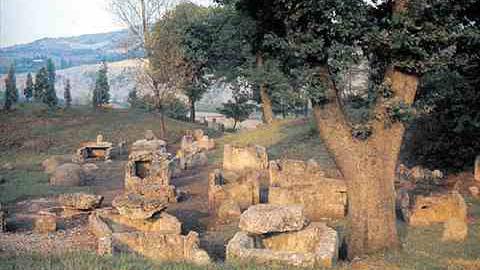
The Etruscans founded VELZNA in 534 BC, with the same name given to other cities in their territory, such as Orvieto, Bolsena, or a fraction of the municipality of Castelnuovo Berardenga; the name may mean "fertile land".
The Etruscan period left an important archaeological legacy, particularly at Misa or Misano (present-day Marzabotto, see photo), an Etruscan trading outpost linking the area with the Po Valley. Its archaeological site is one of the many reasons to explore the province of Bologna, now known as the Metropolitan City of Bologna.
Significant Etruscan artefacts are also preserved in the Pompeo Aria Museum in Marzabotto and in Bologna’s Civic Archaeological Museum.
From Velzna to Bononia
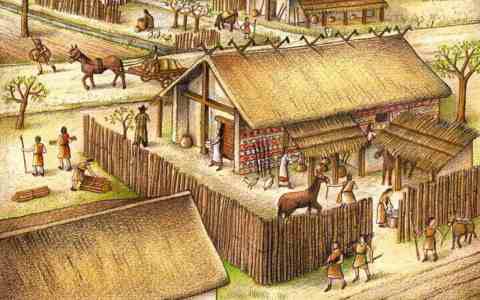
The word VELZNA or FELZNA was pronounced in Latin as Felsina and by this name the city was called by the Romans, at least until it remained in the hands of the Etruscans, that is, until it was conquered by the Boii Gauls in 358 B.C.
In 159 B.C. the Romans conquered it and renamed it Bononia (which later became Bologna in Italian), which seems to derive from the Celtic word bona ("fortified place")
But the old name Felsina has remained in common use and is still used today in Italian, even as an adjective, as a synonym for Bologna.
The Birth of the "Studium"
Subsequently, during the Augustan age, the city experienced a period of strong development that led to the construction of paved roads, aqueducts, public buildings, and thermal baths. Like other cities along the Via Emilia, Bologna was looted and partially destroyed by barbarians until, in 476, the Western Roman Empire fell definitively.
In 727, Bologna was conquered by Liutprand, king of the Lombards, until it was liberated by Charlemagne and returned to the Papal State, becoming part of the Kingdom of Italy at the end of the 9th century. Between the 10th and 11th centuries, during the struggles over investiture (conflicts between the Papacy and the Empire), the influence of Countess Matilda of Canossa, who sided with the Holy See, was felt.
It was during this period that the Studium, the University of Bologna, was founded, attracting students from all over the world, especially from Germany.
Bologna of the towers
The birth of the Commune is dated to the death of Countess Matilda in 1115, and it was mainly composed of lawyers.
In these years, Bologna experienced a period of expansion into the territories of neighboring cities, with the consequent spread of towers and tower houses.
During the wars between Guelphs and Ghibellines, the city experienced alternating fortunes, with subsequent revolts that risked emptying the city.
In 1401, among the noble families of Bologna, the Bentivoglio family emerged, governing the city for 46 years and bringing a period of stability and economic and cultural growth: the Palazzo Pubblico, the Palazzo del Podestà, and Porta Ravegnana were restored.
After the expulsion of the Bentivoglio family, Bologna became part of the Papal States for about three centuries.
From Napoleon to the present day.
In 1796, Napoleon arrived in Bologna, declaring the government of the Papal States null and restoring power to the Senate after centuries. However, following the Congress of Vienna in 1815, the city returned under Papal control until 1860, when it was annexed to the Kingdom of Sardinia, which became the Kingdom of Italy exactly one year later.
The early 1900s saw revolutions, demonstrations, and assassinations against Fascism, culminating in the assassination attempt on Mussolini in 1926.
Important was Bologna's role during World War II: due to its strategic position, the city was repeatedly bombed.
The partisan resistance was fierce, suffering very heavy losses in these areas, especially at Marzabotto and during the Battle of Porta Lame.
The 1970s of the twentieth century were the Years of Lead, characterized by political bombings and massacres, among which the one on August 2, 1980, in Bologna, stands out, when a bomb exploded in the waiting room of the railway station, causing the death of 85 people and the injury of over 200.
YouTube
A beautiful video that in less than half an hour tells the entire history of Bologna from its origins to the present day.